Failure / CPG / 2009
Tropicana and the Cost of Losing the Shelf Cue
The redesign case sits at the center of recognition equity: when the asset is visual memory, improvement starts by protecting what shoppers already know.
Key Takeaways
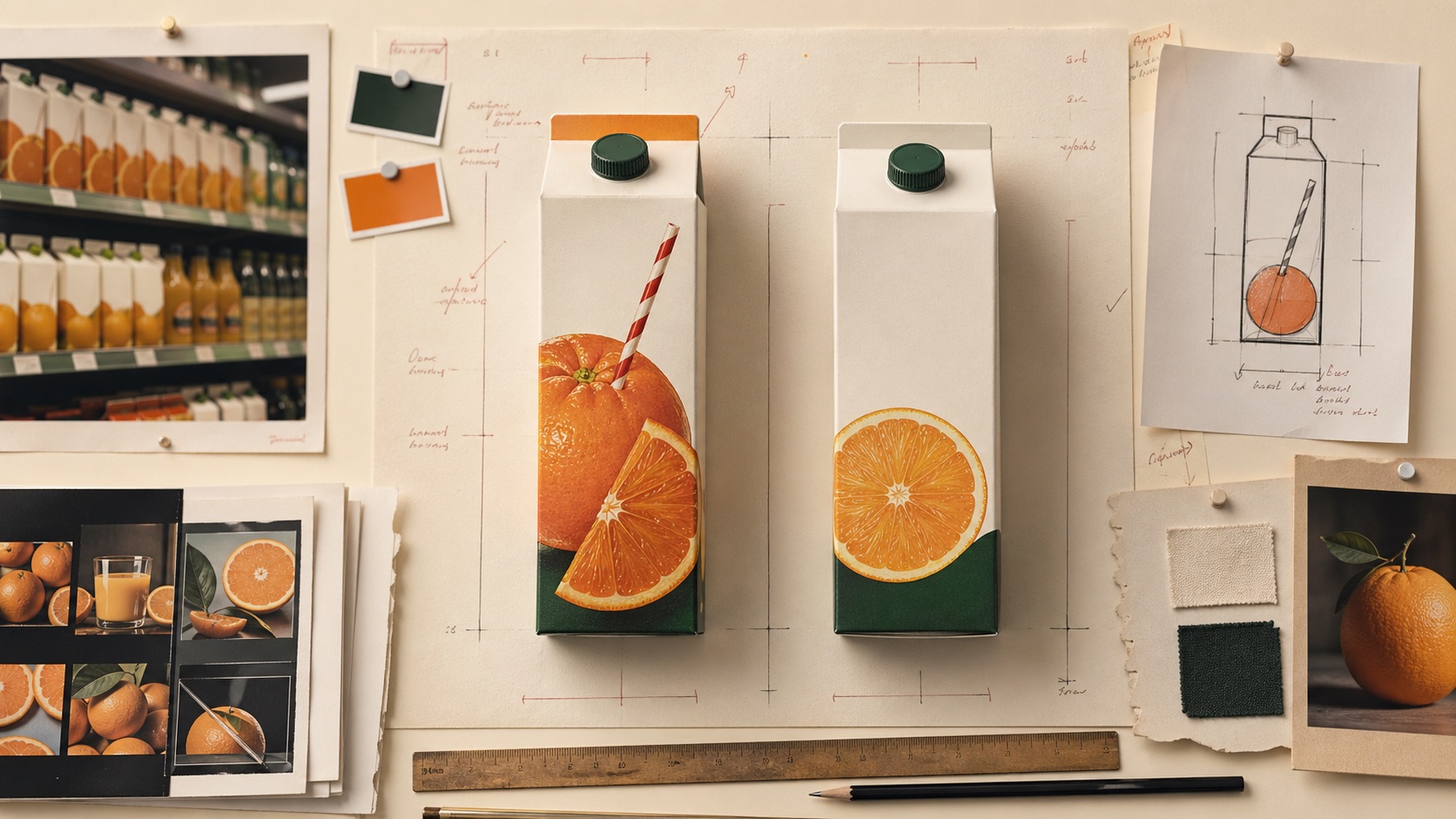
- The redesign removed the orange-with-straw cue that shoppers used to find the product quickly.
- The new pack made the brand look cleaner in isolation, but less distinctive in the shelf environment where the decision happened.
- Reported sales declines after launch turned a packaging update into a commercial reversal.
- The case shows why package redesigns must be tested against recognition, not only preference.
The Decision
In January 2009, Tropicana introduced redesigned packaging for Tropicana Pure Premium orange juice in the United States. The work, associated publicly with Arnell Group, replaced the familiar orange pierced by a straw with a cleaner image of orange juice in a glass. The brand presentation became more minimal, the wordmark orientation changed, and the familiar shelf code became quieter.
The decision was understandable at a surface level. Food and beverage brands often update packaging to feel cleaner, fresher, and more contemporary. But Tropicana was not changing a low-memory asset. It was changing a package that shoppers used as a shortcut. In a refrigerated aisle, customers do not study every carton. They scan for signals they already know.
What Changed On Shelf
The orange-with-straw image did more than communicate freshness. It created an ownable visual device: a whole orange turned into a drinking experience. That cue was fast, distinctive, and difficult to confuse with a generic juice glass. The redesign replaced that memory structure with a more literal product image, which made the carton less immediately identifiable among neighboring orange juice products.
This distinction matters because packaging does not live in a presentation deck. It lives under fluorescent store light, next to private label cartons, competing national brands, price tags, fridge doors, and hurried shoppers. A redesign can win in isolation and still fail at the moment of recognition.
The Reversal
Reports at the time described a swift consumer backlash. Tropicana announced that it would bring back the previous package, including the familiar straw-in-orange visual, after complaints came through blogs, email, and other public channels. Convenience Store News quoted a Tropicana spokesperson saying that the company heard consumers, listened, and responded to the attachment customers had to what they saw as their Tropicana.
The commercial reporting made the reversal harder to dismiss as a loud-minority story. Advertising Age reported that Tropicana Pure Premium sales fell sharply between January 1 and February 22, 2009, with unit sales down 20 percent and dollar sales down 19 percent. The important point is not only the exact number. It is the speed at which a packaging decision became visible in the business.
The Recognition Lesson
The Tropicana file is a shelf-recognition case. It shows that visual equity can sit inside a single recurring cue, and that the cue may be more commercially important than the team realizes. The orange with a straw was not a nostalgic flourish. It was a retrieval device. It helped a shopper locate the product and confirm that the product was the same one they intended to buy.
A redesign brief can ask for freshness, modernity, simplicity, or premium feel. None of those goals is wrong. The danger comes when those goals are allowed to erase the cues that carry memory. A package can become more elegant while becoming less findable. In grocery, less findable is not a design issue. It is a revenue issue.
The Operating Pattern
The operating lesson is to test redesigns in the conditions where the decision occurs. That means shelf context, speed, adjacent competitors, variant recognition, distance, and repeat-purchase behavior. Asking whether customers like a cleaner package is not the same as asking whether they can find the brand at a glance.
Tropicana also shows why redesign decisions need a protected-assets map before creative exploration begins. A protected asset is not frozen forever, but it cannot be removed casually. If a team wants to retire it, the burden of proof rises. The redesign must show how recognition will survive the change.
Comparable Cases
Sources
- Convenience Store News, Tropicana Reverts to Old Packaging, March 4, 2009
- Advertising Age, Tropicana Line's Sales Plunge 20% Post-Rebranding, April 2, 2009
- ScienceDirect, A study of the impact of package changes on orange juice demand
- Designboom, consumers want the old packaging of tropicana juice back, February 26, 2009
- HispanicAd, Packaging: Lessons from Tropicana's fruitless design, February 16, 2009
- Fortune via CNNMoney, Tropicana's botched redesign, July 1, 2009
Frequently Asked Questions
What type of case is Tropicana?
Tropicana is currently filed under Failure.
What does this file cover?
It records the decision pattern, consequence, and decision lesson for the case.
Why does this case matter?
It shows how a brand decision can change recognition, trust, or control beyond the visible design surface.
Does the article contain a commercial CTA?
No. Brand Archive article pages do not carry in-article commercial calls to action.